Email Marketing vs Social Media for Restaurants
Email Marketing vs Social Media for Restaurants
Restaurants often ask:
Should we focus more on email marketing or social media?
The answer depends on what you are trying to achieve.
Social media is usually stronger for:
Discovery
Brand awareness
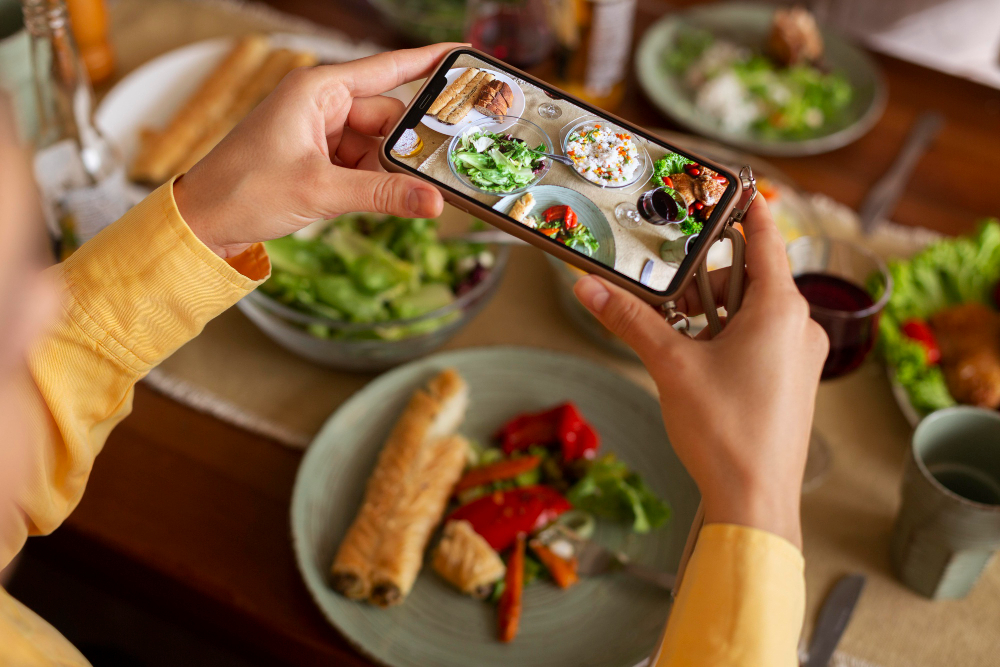
Food visuals
Community engagement
Reaching new customers
Building familiarity
Email is usually stronger for:
Repeat visits
Direct communication
Loyalty
Win-back campaigns
Customer segmentation
Direct ordering
Promoting specific offers
Restaurants should not treat these channels as competitors.
The strongest marketing system usually uses social media to attract attention and email to build a direct customer relationship.
Social Media Is Better for Discovery
Platforms such as Instagram, TikTok, and Facebook allow restaurants to reach people who may have never visited before.
Restaurants can showcase:
Signature dishes
New menu items
Behind-the-scenes content
Employees
Restaurant atmosphere
Events
Customer experiences
Strong restaurant content can introduce the brand to thousands of potential customers.
Meta continues to emphasize discovery and recommendation systems across Instagram and Facebook, while restaurant marketing guidance from Toast highlights social media as an important channel for visibility, community, and customer engagement.
https://pos.toasttab.com/blog/on-the-line/restaurant-social-media-marketing
Social media is especially useful when customers need to see and feel the restaurant experience before deciding to visit.
Email Is Better for Reaching Existing Customers
Email usually starts after the restaurant has already established some relationship with the customer.
That customer may have:
Ordered online
Joined loyalty
Made a reservation
Signed up on the website
Submitted a catering inquiry
Attended an event
This makes email especially valuable for customer retention.
A restaurant can send targeted campaigns such as:
New customer:
Come back and try another signature dish.
Loyal customer:
You are close to your next reward.
Inactive customer:
We have not seen you recently.
Online-order customer:
Order your favorites directly again.
Email allows restaurants to communicate with specific customer groups instead of depending on an algorithm to decide whether someone sees the message.
Social Media Helps Build the Brand
Social media is not only about promotions.
It can help customers understand the restaurant's personality.
Content can show:
Chef stories
Food preparation
Restaurant history
Employee personalities
Customer celebrations
Local community involvement
Restaurant humor
New products
This creates familiarity.
A customer may follow a restaurant for several weeks before deciding to visit.
Good social media makes the restaurant feel recognizable before the customer ever walks through the door.
Email Is Better for Customer Retention
A follower is not necessarily a customer.
Someone may watch your Instagram Reels for months without ever visiting.
Email generally represents a deeper relationship because customers often provide their information after an interaction with the restaurant.
That makes email useful for campaigns designed to increase customer frequency.
Examples include:
Welcome campaigns
Second-visit campaigns
Birthday rewards
Loyalty reminders
Win-back emails
Direct-order promotions
Seasonal menu announcements
Toast's restaurant email guidance specifically highlights loyalty, re-engagement, menu launches, birthdays, and personalized offers as ways restaurants can encourage customers to return.
https://pos.toasttab.com/blog/on-the-line/restaurant-email-marketing-examples
Social Media Depends More on Algorithms
When a restaurant posts on Instagram or Facebook, not every follower will see the post.
Platforms determine distribution based on factors such as:
Engagement
Content relevance
User behavior
Format
Recommendation systems
This makes social media powerful for discovery but less predictable for reaching a specific customer.
Email provides a more direct communication channel.
The restaurant controls:
Who receives the campaign
When it is sent
Which customer segment receives it
Which link customers see
That direct access is one reason restaurants should build their own customer database instead of relying entirely on social followers.
Social Media Creates More Public Engagement
Social platforms make it easy for customers to:
Like
Comment
Share
Tag friends
Send direct messages
Create user-generated content
This creates public social proof.
For example, someone sharing a restaurant Reel with three friends may create a future group visit.
A customer's food photo can also introduce the restaurant to an entirely new audience.
Email does not usually create the same public sharing effect.
That makes social media especially strong for awareness and community building.
Email Allows Better Segmentation
Email becomes more powerful when customer data is connected to the restaurant's ordering, loyalty, reservation, or CRM systems.
Restaurants may be able to create groups such as:
Frequent customers
New customers
Lapsed customers
Loyalty members
Online-ordering customers
Catering customers
Customers by location
Mailchimp, Klaviyo, Toast, and other marketing platforms support segmentation and automated customer journeys based on available customer data and permissions.
For example:
Instead of emailing:
20% OFF THIS WEEK
to 10,000 people, a restaurant could send:
We haven't seen you in 60 days — come see what's new
only to inactive customers.
That protects margins and makes the campaign more relevant.
Social Media Is Better for Food Content
Restaurants sell something highly visual.
Social media provides an ideal environment for:
Ramen pulls
Cheese melts
Cocktail pours
Sushi preparation
Grill footage
Dessert reveals
Behind-the-scenes cooking
Short-form video can make a dish desirable before the customer even reads the description.
Email can include strong food photography, but social platforms are generally better for frequent visual storytelling.
This is why restaurants should not abandon social media simply because email may create stronger retention.
The two channels solve different problems.
Email Is Better for Direct Sales Campaigns
When a restaurant wants a customer to take one specific action, email can be very effective.
For example:
Order dinner tonight
Reserve Mother's Day
Book your holiday catering
Use your loyalty reward
Come back before your birthday offer expires
The email can contain one message and one button leading directly to the correct page.
This makes email useful for driving:
Orders
Reservations
Catering inquiries
Loyalty redemption
Event registrations
The shorter the path between the message and the customer action, the better.
Social Media Should Feed Your Email List
One of the best strategies is using social media to build owned customer channels.
For example:
Instagram Reel
Want first access to our next limited ramen? Join our email list.
Or:
Instagram Story
Join our rewards program and get menu launches and member offers.
Social media creates attention.
Then the restaurant converts some of that audience into:
Email subscribers
Loyalty members
Direct-order customers
Once that happens, the restaurant has a stronger direct relationship with the customer.
Email Should Also Feed Social Media
The relationship can work in the opposite direction.
Email campaigns can encourage customers to:
Follow Instagram
Watch a new video
Participate in a social giveaway
Share restaurant content
Attend a community event
For example:
We just launched our newest ramen. Watch how it's made on Instagram.
The channels should support each other.
Which One Should Restaurants Prioritize?
It depends on the goal.
Choose Social Media When You Need:
New customer awareness
Strong visual storytelling
Community engagement
Restaurant branding
Event exposure
User-generated content
Choose Email When You Need:
Repeat visits
Customer retention
Win-back campaigns
Loyalty engagement
Direct ordering
Customer segmentation
Catering follow-up
Use Both When You Want:
New customer → First visit → Email signup → Repeat visit → Loyalty → Regular customer
That customer journey is much stronger than depending on one channel alone.
A Simple Restaurant Marketing System
A practical strategy could look like this:
Social Media
Publish:
Food content
Behind-the-scenes videos
Customer stories
New menu launches
Restaurant personality
Goal:
Get attention and create desire.
Send:
Welcome campaigns
Loyalty reminders
New menu announcements
Win-back campaigns
Slow-day promotions
Direct-order campaigns
Goal:
Bring customers back.
Loyalty
Use customer behavior to create:
Rewards
Birthday offers
Visit reminders
Win-back offers
Goal:
Increase customer frequency.
Each channel has a different job.
What Should Restaurants Measure?
Social Media
Track:
Reach
Video views
Engagement
Shares
Profile visits
Website clicks
Follower growth
Track:
Clicks
Orders
Reservations
Promotion redemption
Revenue
Returning customers
Unsubscribes
Do not compare social media likes directly with email revenue.
They serve different parts of the customer journey.
The important question is whether each channel is accomplishing its intended job.
Common Restaurant Marketing Mistakes
Avoid:
Depending entirely on Instagram
Collecting emails but never using them
Posting only promotions on social media
Sending every email subscriber the same message
Discounting constantly
Measuring social media only by followers
Measuring email only by open rates
Sending traffic to the homepage instead of the intended action
Treating email and social as separate strategies
Final Thoughts
Email marketing and social media are both valuable for restaurants.
But they perform different jobs.
Social media helps restaurants get discovered.
Email helps restaurants build direct customer relationships and encourage repeat visits.
A restaurant that focuses only on social media may generate attention without building a customer database.
A restaurant that focuses only on email may struggle to reach new customers.
The stronger strategy is:
Social media for discovery.
Email for retention.
Loyalty for frequency.
Use the channels together, and restaurant marketing becomes a customer journey instead of a collection of random promotions.
Build a Complete Restaurant Marketing System
Restaurant Growth Lab helps restaurant owners connect social media, email, SMS, loyalty, direct ordering, advertising, and customer data into one restaurant growth system.
Do not choose between attention and retention.
Build a system that does both.
References
Toast — Restaurant Social Media Marketing
Restaurant-specific guidance on using social platforms for awareness, content, customer engagement, and local restaurant marketing.
https://pos.toasttab.com/blog/on-the-line/restaurant-social-media-marketing
Toast — Restaurant Email Marketing Examples
Examples of restaurant email campaigns for loyalty, re-engagement, menu launches, birthdays, events, and repeat visits.
https://pos.toasttab.com/blog/on-the-line/restaurant-email-marketing-examples
Toast — Restaurant Marketing Strategies
Guidance covering restaurant social media, email, loyalty, advertising, and customer retention.
https://pos.toasttab.com/blog/on-the-line/restaurant-marketing
Mailchimp — Email Marketing for Restaurants
Restaurant-specific guidance covering email segmentation, automation, customer relationships, and repeat business.
https://mailchimp.com/resources/email-marketing-for-restaurants/
Mailchimp — Email Marketing vs Social Media
Guidance comparing the strengths of email and social media within a broader digital marketing strategy.
https://mailchimp.com/resources/email-marketing-vs-social-media/
Mailchimp — Audience Segmentation
Guidance on creating targeted customer segments for more relevant marketing communication.
https://mailchimp.com/resources/email-segmentation/
Meta for Business — Instagram Marketing
Official information about using Instagram for business discovery, customer engagement, content, and advertising.
https://business.instagram.com/
Meta for Business — Meta Advantage+
Official information about Meta's AI-powered advertising and audience optimization tools across Facebook and Instagram.
https://www.facebook.com/business/ads/meta-advantage-plus