Habit Burger’s $10 Dipping Meal Shows How Value Can Still Feel Different
Habit Burger’s $10 Dipping Meal Shows How Value Can Still Feel Different
Restaurant value promotions do not have to mean simply offering more food for less money.
Habit Burger & Grill recently launched three $10 Dipping Trio Boxes that combine a value meal with something more memorable: an interactive dipping experience.
Each box includes burger halves designed for dipping, crispy chicken bites, a side, a drink, and sauce. The three versions are BBQ, Ranch, and Spicy.
That makes this promotion interesting for restaurant owners.
Habit is competing on price—but it is also giving customers something to talk about.
What Habit Burger Launched
The limited-time Dipping Trio Boxes are part of Habit’s broader Gotta Habit Meal Deals strategy.
Customers receive:
Two burger halves
Five crispy chicken bites
One side
One drink
Dipping sauce
for $10 at participating locations.
Habit previously introduced meal deals at multiple price points, including $6, $8, and $10 options.
That tells us the chain is clearly paying attention to consumer demand for value.
But the newest promotion adds another layer.
It makes the meal more interactive.
The Interesting Part Is Not Just the $10 Price
Restaurant operators are under pressure to offer better value.
But simply lowering prices can create a race to the bottom.
Habit’s approach is more interesting because the customer gets:
Value + Experience
instead of only:
Value = Lower Price
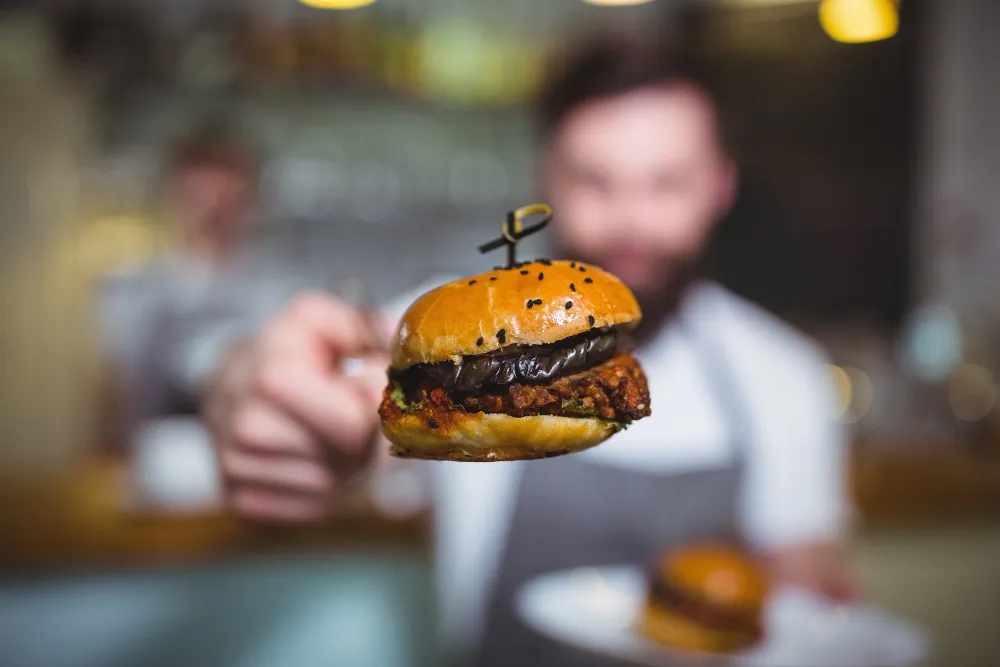
The burger is cut into pieces specifically so customers can dip it into different sauces.
That small change turns a standard burger meal into something that feels new.
It can also make the product easier to photograph, film, and share.
That matters in modern restaurant marketing.
Food Experiences Create Marketing Content
Think about which of these is more interesting on social media:
Here is our cheeseburger.
or:
Here are three sauces. Which one are you dipping your burger into first?
The second creates:
Interaction
Visual movement
Customer opinions
Social content
User-generated content
The product itself creates the marketing opportunity.
Restaurants should increasingly ask:
Is this dish visually interesting?
Does it create an experience?
Can customers interact with it?
Would someone want to film it?
That does not mean every item needs to become a gimmick.
But small experiential elements can make familiar food feel new.
Sauces Can Be a Differentiation Tool
Nation’s Restaurant News cited Technomic research indicating that 34% of consumers consider available sauces and condiments when deciding where to eat.
That is significant because sauces are relatively simple compared with launching an entirely new entrée.
Restaurants can create differentiation through:
House-made sauces
Spicy sauces
Regional flavors
Seasonal sauces
Sauce flights
For Asian restaurants, the opportunity may be even stronger.
Think:
Gyoza + three dipping sauces
Karaage + spicy mayo + yuzu sauce + teriyaki glaze
Korean fried chicken + three heat levels
Tempura + multiple dipping options
The restaurant does not necessarily need a completely new product.
It can create a new experience around an existing one.
Bundles Can Communicate Value Better Than Discounts
Imagine two promotions.
Promotion A
20% OFF
Promotion B
Burger + Chicken Bites + Fries + Drink + Sauce — $10
Both may reduce the customer's effective price.
But Promotion B communicates value differently.
The customer can immediately see what they receive.
That matters when consumers are price-sensitive.
Instead of focusing on the percentage discount, the restaurant creates a complete meal at a clear price point.
For independent restaurants, this can be a stronger alternative to constantly offering:
15% OFF
20% OFF
or:
BOGO EVERYTHING
Apply This to Asian Restaurants
Asian restaurants can adapt the same concept without copying Habit directly.
For example:
Gyoza Dipping Box
6 gyoza
Karaage bites
Rice or fries
Three dipping sauces
Drink
Or:
Korean Chicken Sauce Flight
Korean fried chicken
Three sauces
Side
Drink
Or:
Ramen Side Combo
Small ramen
Gyoza
Drink
Choice of dipping sauce
The important part is combining:
Clear value
with:
Something distinctive
That makes the promotion easier to market.
Build the Offer Around Contribution Profit
A $10 meal is not automatically a good promotion.
The restaurant still needs to calculate whether the bundle makes financial sense.
For example:
Selling price:
$10
Food cost:
$3.25
Packaging:
$0.50
Promotion or advertising cost per order:
$0.75
Contribution before labor and overhead:
$5.50
Now compare that with the restaurant’s normal menu.
The goal should not be:
Sell as many bundles as possible.
The goal should be:
Create incremental profitable transactions.
Measure More Than Bundle Sales
If you test a meal deal like this, track:
Number of bundles sold
Average check
Food cost
Contribution profit
New customers
Add-on purchases
Repeat visits
Also watch whether the promotion reduces sales of higher-margin items.
For example:
If customers who normally spend $16 suddenly switch to a $10 meal, the promotion may reduce revenue.
But if the offer brings in customers who otherwise would not have visited, the economics may be very different.
That is why incremental sales matter.
Add-On Opportunities Still Matter
A value meal can also create opportunities for profitable upgrades.
For example:
Upgrade drink +$2
Add dessert +$4
Extra sauce +$1
Add appetizer +$5
The restaurant keeps the attractive headline price while giving customers the ability to increase their check.
That can help balance customer value with restaurant profitability.
Test the Experience on Social Media
If you launch an interactive food promotion, build content around the interaction.
For example:
Which sauce wins?
Spicy vs. Yuzu vs. Garlic
How do you dip your gyoza?
Choose your favorite sauce
Short videos showing dipping, pouring, stretching, crunching, or mixing often create stronger visual interest than static product shots.
The menu item and content strategy should work together.
Final Thoughts
Habit Burger’s $10 Dipping Trio Box is a good example of how restaurants can combine:
Value
Experience
Marketing
The promotion gives customers a clear price point while also making an ordinary burger meal feel more interactive.
That is the bigger lesson for independent restaurants.
Do not assume value means:
Lower prices everywhere.
Instead, look for ways to create:
Bundles
Meal sets
Sauce flights
Interactive dishes
Limited-time experiences
Profitable add-ons
Give customers something that feels worth the price—and something they remember.
For Asian restaurants especially, sauces, appetizers, small plates, and customizable flavors create plenty of opportunities to build this type of offer.
Turn Value Into a Marketing Strategy
Restaurant Growth Lab helps restaurant owners create promotions and menu campaigns designed around traffic, average check, customer acquisition, and contribution profit.
Before launching another discount, ask:
Can we make the offer feel more valuable without simply making the food cheaper?
References
Nation’s Restaurant News — Habit Introduces Dipping Burgers to Meal Deal Menu
Coverage of Habit Burger & Grill’s $10 Dipping Trio Boxes, sauce strategy, meal-deal positioning, and consumer sauce research.
https://www.nrn.com/fast-casual/habit-introduces-dipping-burgers-to-meal-deal-menu
Habit Burger & Grill — Official Website
Current menu, restaurant information, ordering, and Habit Burger products.
https://www.habitburger.com/
Habit Burger & Grill — Press
Official Habit Burger news and brand announcements.
https://www.habitburger.com/press/